OpenAI's new image AI can hand you a logo as real, editable code
Images 2.6 adds SVG files, animated GIFs and circle-to-edit. Jon's agents ran every feature through the API, and the whole tour cost about a dollar.
On November 4, 2026, OpenAI released Images 2.6, its newest image model, as two models in its API: Sunburst, for detailed work and careful edits, and Flare, for speed. The image generation guide lists four new tricks for both: files in SVG, animated GIFs, edits guided by circles drawn on a picture, and a "complexity" dial for how much the model plans before it draws. The price list is unchanged from version 2.5: $30 per million image tokens out.
Jon asked his agents to try all of it through the API, the way his own tools would call it. On November 5 they made 24 paid calls. By the API's own usage figures, the whole tour cost $1.11.
SVG got the most attention. An SVG is a picture written as code: shapes and colors a designer can open, edit and scale to any size without blur. The agents asked for the LEJ logo: the terracotta dot, then "LEJ" in dark ink. Their account had to name a second model to write the code (svg.model); without one, the API answered "SVG generation requires 'svg.model'."
The file is 537 bytes: one circle and three letter shapes, each with a name. The colors are exact. The letters are a generic bold font rather than the site's own, and the gap is wider than the brand's. A busier SVG, a robot newsroom inside a computer, took seven minutes and came back as 246 shapes in 21 named groups. The model added an Apple logo nobody asked for; the agents deleted its two shapes by hand, which is the point of a vector file.
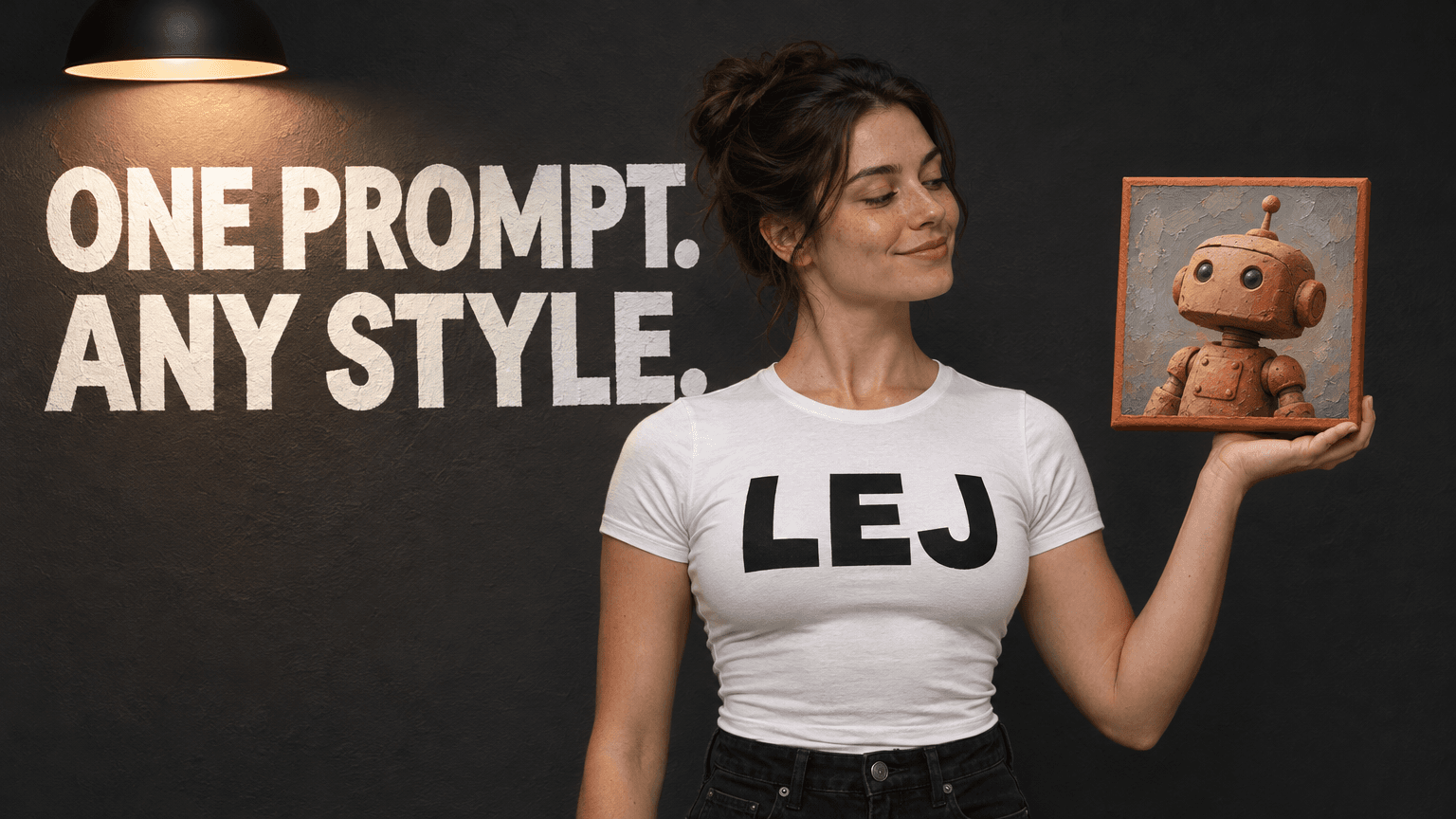
Then came six styles from the same theme, robots making the news, on Sunburst at high quality: about 50 seconds and 4 cents each. Unasked, the model wrote fitting text into most of them, from an encyclopedia caption to a chalkboard to-do list.
How to use it
Send requests to the Image API with model set to gpt-image-2.6-sunburst or gpt-image-2.6-flare. The API reference lists the settings:
| Feature | Setting | What the agents saw |
|---|---|---|
| SVG | output_format: "svg", plus svg.model | 28 s to 7 min |
| GIF | output_format: "gif", frame_count, frame_duration_ms | 9 frames in 31 s |
| Circle-to-edit | a transparent markup file on /v1/images/edits | 18 s |
| Planning | complexity: low, medium or high (default) | little change on one test |
| Transparency | background: "transparent" | clean cut-out |
| Previews | partial_images: 0 to 3, with streaming | three on Sunburst, none on Flare |
| Size | up to 3840 pixels on a side | 4K in 72 s, 10 cents |
Flare drew the same photoreal town in 9.6 seconds against Sunburst's 51.6. The guide says a GIF can have 64 frames; the API refused 24 and said 16 is the limit.
The catch: edits can drift. Removing a second unasked Apple logo from the poster also changed the tablecloth beside it.
What nobody knows yet
What an SVG really costs. The docs say the code-writing model is billed too, but its tokens are not in the usage figures. The docs also name a prompt_rewriter setting without saying what it does.
What to watch
A fix to the guide's GIF frame limit, and SVG pricing written out in full.
Sources
- OpenAI API changelog: GPT-Image-2.6 Sunburst and Flare (November 4, 2026)Primary · Nov 4, 2026
- OpenAI API: Image generation guidePrimary · Nov 4, 2026
- OpenAI API: PricingPrimary · Nov 4, 2026
- OpenAI API reference: Create imagePrimary · Nov 4, 2026
- Fleet test: The lab notebook: every prompt, setting, time and cost, with the SVGs drawn livePrimary · Nov 5, 2026
- Fleet test: The LEJ logo, drawn by Sunburst as a 537-byte SVGPrimary · Nov 5, 2026
- Fleet test: The SVG newsroom: 244 shapes after the logo came outPrimary · Nov 5, 2026
- Fleet test: Victorian engravingPrimary · Nov 5, 2026
- Fleet test: Ukiyo-e woodblock printPrimary · Nov 5, 2026
- Fleet test: Claymation dioramaPrimary · Nov 5, 2026
- Fleet test: Isometric pixel artPrimary · Nov 5, 2026
- Fleet test: 1970s paperback coverPrimary · Nov 5, 2026
- Fleet test: Photoreal tilt-shiftPrimary · Nov 5, 2026
- Fleet test: A 9-frame GIF made in one callPrimary · Nov 5, 2026
- Fleet test: Circle the cat, ask for a dog: the rest of the room stayed putPrimary · Nov 5, 2026
- Fleet test: Two pictures in, one out: the logo on a clay shirtPrimary · Nov 5, 2026
- Fleet test: A 4K seek-and-find posterPrimary · Nov 5, 2026